
Monkey Gym
Specialised Gross Motor Program
Supporting emotional regulation, sensory processing and physical development
This is a specialist OT program where sessions focus on using strength, mobility and flexibility work (adaptive gymnastics, yoga and contortion movements) to support gross motor development, sensory processing and emotional regulation.
Why focus on flexibility?
In an era of increased screen time and sedentary behavior, children’s (and adults') bodies often hold more tension than ever before. This physical tension directly impacts our mental state. Strength, flexibility and mobility work are powerful tools for:
-
Regulating the nervous system and reducing anxiety/supporting emotional regulation
-
Building physical confidence and body awareness.
-
Improving postural stability and core strength.
Furthermore, if your child is hypermobile, it is vital that they develop active flexibility and strength throughout their full range of motion (ROM). Without targeted strength work, hypermobility can lead to joint instability and an increased risk of injury. In this program, we don't just focus on passive flexibility; we focus on joint integrity by building the strength required to control and utilize that range, directly support their overall occupational performance and physical safety in daily activities.
Why was this program was created?
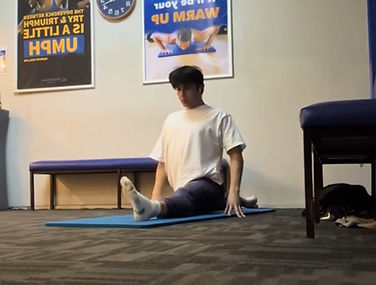
Therapeutic Use of Self means a clinician using their own personality, insights, occupations and skills to build rapport and improve outcomes. I don’t just teach these movements; I participate in them. Contortion, yoga and gymnastic movements are occupations/activities that I also regularly engage in. These are tools for physical health and emotional regulation that children can carry from childhood into adulthood. I practice what I preach!
The reason this specialised program exists is that many children on my caseload deeply enjoy gymnastics and movement-based activities, such as obstacle courses, but sometimes struggle within traditional class environments or lose interest in a group setting. It is a missed opportunity when children miss out on these activities, especially as we have mountains of evidence regarding the benefits of physical activity for both physical and mental health. This service offers an adaptive and alternative pathway to support engagement and participation, ensuring every child can reap those rewards in a way that works for them.
What to expect
In these sessions, I provide individualised 1-on-1 support using a variety of equipment, such as balance beams, mini trampolines, stepping stones, resistance bands, yoga blocks, crawling tunnels, foam furniture and more. Every session is specifically tailored to the child's unique needs and interests. For example:
Example 1 (Older Child, 14 years)
Example 2 (Younger Child, 7 years)
With an older client who had previously been enrolled in gymnastics, we focused on the specific goal of mastering her splits and backbends, as this a was meaningful occupation for her.
Using her interests and gross motor activities as a therapeutic modality, we supported emotional regulation, postural stability, gross motor development and ability to plan and sequence.
In her sessions, we developed a structured stretching routines and performed the exercises together. This intervention did more than just increase her physical range; the flexibility and mobility work provided proprioceptive input, which offers a natural calming effect on the nervous system. By utilising these movements to support emotional regulation, we were able to help her feel more grounded and organised, leading to the noticeable improvements her mother observed in her daily life. She would also begin to engage and modify her routine independently.
By working through a structured plan as a team, we supported her nervous system regulation and simultaneously built active flexibility in a way that felt like a shared achievement rather than a clinical task.
It is important to note that this session was individualised specifically for her. For another 14-year-old client, the session may look very different—perhaps using a more play-based approach where activities are gamified as a rigid structure does not suit every child.
For a younger client, I focused on high-engagement gamification to ensure the session felt like a series of fun, play-based challenges. For example, we utilised a modified game of Jenga where the child remained in a 'pancake' (seated straddle) position. This required them to reach forward and stabilise their core to remove the blocks, turning a high-level mobility drill into a game.
We also incorporated 'lunge races' and games like Twister to build strength and coordination. This approach allowed the child to receive the sensory input they required while being fully immersed in motivating play.
The parent noted that this approach to therapy was effective, reporting improved emotional regulation at home. Furthermore, the parent felt empowered to implement similar movement-based games at home, turning therapy into a sustainable daily practice.
Practicing what I preach: a personal commitment
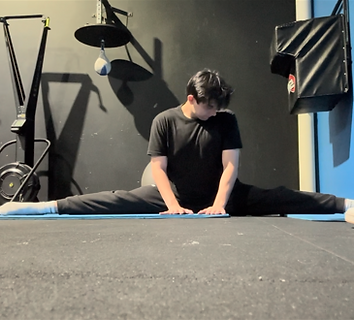
I believe it is vital that a therapist's recommendations are grounded in real-world application. As you can see from the images, I truly practice what I preach. These physical disciplines are occupations I have sustained personally since I was 11 years old (back in 2012) all the way through to the present day.
I share this because I believe the most effective therapy happens when a practitioner follows their own advice. When planning Monkey Gym sessions, I don't just observe from the sidelines. I believe in modeling the movements and being actively involved in the session alongside the child. We do the activities together—ensuring that every drill is not only therapeutic but also a shared, motivating experience.
FAQ
Why use adapted gymnastics, yoga and contortion skills in Occupational Therapy?
While I incorporate mobility work into standard OT sessions (when relevant), Monkey Gym offer specialised sessions where flexibility, mobility and strength work are the primary modalities used to achieve therapeutic goals.
By utilising adapted gymnastics, yoga, and contortion skills (splits, bridges, pancakes, etc.) we are doing more than just build physical skill. These movements provide the brain with high-intensity proprioceptive input. This is the essential information our muscles and joints send to the brain to tell us where our body is in space.
This type of 'Heavy Work' provides organising input for the nervous system. It acts as a natural calmative, helping children (and adults) reduce sensory overload, increase focus and build greater postural control. Essentially, we are using these high-level physical practices as a gateway to better emotional regulation, sensory integration and overall wellbeing.
How does this differ from regular Jordan OT sessions?
A regular OT session is often more flexible in terms of focus and modalities used. For example, we might supporting toilet training, handwriting, learning to tie shoes, or implementing behavioral strategies at home.
Monkey Gym sessions are much more targeted. While we still work toward emotional regulation and sensory processing goals, the primary modality used to achieve this is through gross motor work (strength, mobility and flexibility work).
Who is this program best suited for?
Based on my experience, Monkey Gym is most effective for:
-
Children aged 6 years and above: Every session is fully individualized. Some older children enjoy a structured approach to mastering specific skills, while others prefer 'gamifying' the movements so they don't feel like repetitive exercises. I’ve even had clients who view the training as gaining "stretchy superhero powers," which serves as a massive motivator.
-
Children with an interest in movement: If your child naturally gravitates toward gymnastics, dance, martial arts, or obstacle courses, they will likely find this style of session highly engaging.
-
Movement Seekers: This is ideal for children who actively seek out 'Heavy Work' (proprioceptive input) to help them feel organized, calm, and focused.
A Note on Suitability:
This program is a highly targeted intervention. If a child does not have a strong intrinsic interest in these type of physical activities, my Regular OT sessions are likely a better fit. Standard sessions offer the flexibility to pivot between different goals and use a wider range of strategies and interventions.
Additionally, for children who are non-verbal or have significant difficulty following multi-step instructions, regular sessions are generally recommended. This allows us to use a wider variety of specialised support strategies. While regular sessions can still incorporate equipment like balance beams and trampolines, they are not restricted to the specific physical modality used in Monkey Gym, ensuring the therapy remains accessible and effective for their unique requirements.
Process to book
If you are interested in starting, please click 'Book Appointment' below. On the intake form, you will see a section titled 'Occupational Focus Areas'—simply select 'Monkey Gym' as one of your preferences. We can then discuss the program in more detail during your initial assessment and intake process.
Questions?
Feel free to email me at info@lindonjordanot.com.au and I’ll be happy to help. Please note that while I occasionally require extra time to work through a high volume of inquiries, I aim to respond to everyone within 1–3 business days/"